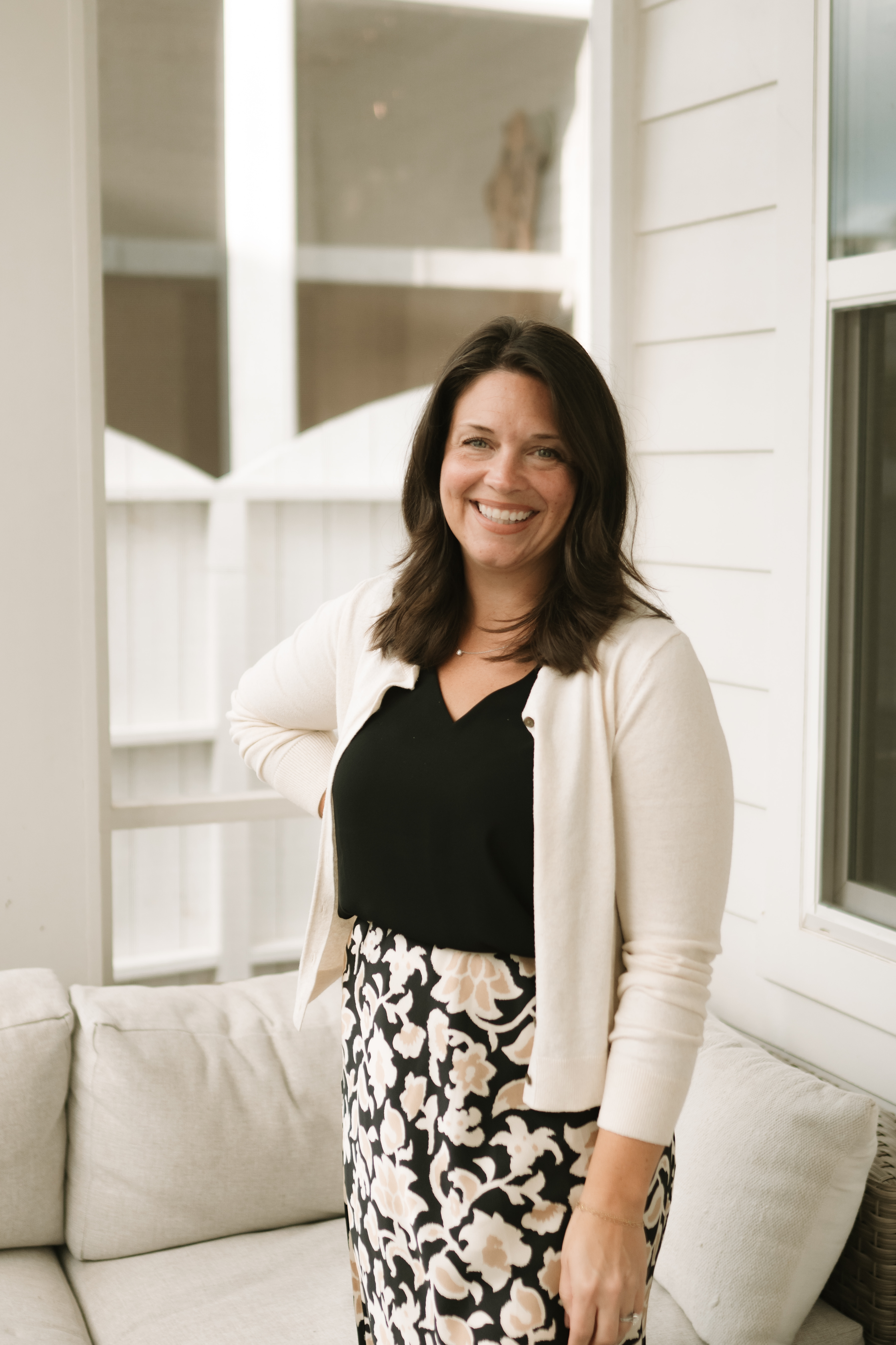
Every week I get the same message in our community inbox. "Amanda, I want to learn day trading but I have no idea where to start. Everyone online is selling me something. I don't trust YouTube. I have a family, a job, a real life. Where do I actually start?"
I get it. When I tried to learn day trading as a woman five years ago, the entire industry felt built for someone else. The educators were men. The communities were rough. The content assumed you had eight hours a day to watch a screen and zero kids pulling at your sleeves. That mismatch is exactly why most women quit before they ever get good.
So here's the roadmap. Not the fantasy version. The real one — the same one we've used to help 2,000 women learn day trading without burning out, blowing up accounts, or losing the ones they love along the way.
Why Day Trading Looks So Different When You're a Woman
Before we get into the how, let's be honest about the why. Most generic trading education isn't built for the way women actually want to learn. We learn in community. We learn by asking questions until we feel safe. We learn by understanding the why behind a rule, not just memorising the rule.
The traditional finance world handed us the opposite. Loud rooms. Macho framing. Mentors who say "just trust the chart" with zero patience for follow-up questions. Most women don't drop out of trading because they can't do the maths — they drop out because the culture told them they didn't belong.
That's the part we have to fix first. Because if you're going to learn day trading, you need a place to ask "what is a candlestick?" on day 73 without anyone rolling their eyes.
"You can be great at day trading and still be a great mum, a great wife, a great anything. The two aren't in conflict. But you have to learn it from a place that gets your life — not from a place that tells you to sleep less and grind harder."
What Day Trading Actually Is (No Hype Version)
Day trading is buying and selling financial instruments — currencies, indices, crypto, futures — inside a single day, with the goal of taking smaller profits more frequently than long-term investing. You don't hold positions overnight. You're in, you're out, you sleep.
That's it. No magic. No insider knowledge.
What it isn't: gambling. Day trading done well is a structured business. You have a strategy. You have rules. You have risk management. You take A-plus setups when the market gives them to you and you sit on your hands when it doesn't. The traders who lose money are usually the ones who treat it like a slot machine. The ones who win treat it like a part-time job with a really high learning curve.
The reason women, in particular, tend to do well at this once they get past the first few months is that we're naturally more risk-aware. We don't want to lose the money. We're patient. We're willing to follow rules. Those traits — which the finance world has historically mocked — are exactly what makes a good trader.
The 6-Step Framework to Learn Day Trading as a Woman
Here's the roadmap we walk every new member through. It's not flashy. It works.
Step 1 — Learn the language (weeks 1-2)
You can't trade what you don't understand. Before you risk a single pound, you need to know:
- Pip — the smallest price move in a currency pair (think: pence on a pound).
- Spread — what the broker charges you for the privilege of entering a trade.
- Leverage — borrowed money that magnifies your gains AND your losses (this is the one that wipes people out).
- Stop loss — your "I'm wrong, get me out" line. Non-negotiable.
- Risk per trade — the small percentage of your account you're willing to lose on a single trade. We teach 1-2%, never more.
If those five concepts feel fuzzy, you're not ready to trade. That's not a failure — it's information. Go back, read, watch, ask. Build the foundation before the house.
Step 2 — Pick ONE market to start (week 3)
Forex, crypto, futures, stocks — they're all viable. But trying to learn day trading across all of them at once is how you learn nothing. Pick one. We usually recommend forex to start because the spreads are tight, the leverage is accessible, and the same patterns repeat 24 hours a day so you can practise on your schedule.
Stick with one currency pair for the first three months. EUR/USD, GBP/USD, or GBP/JPY are great training grounds. Boring? Yes. That's the point.
Step 3 — Demo account for 8 weeks minimum (weeks 3-10)
This is the part everyone wants to skip. Don't.
Open a demo account with your broker. Fund it with a fake amount that matches what you'll eventually trade with — £500, £1,000, £5,000, whatever your real plan is. Now trade it like the money is real. Every entry needs a reason. Every exit needs a plan. Every loss gets journaled.
The point isn't to make demo money. It's to prove to yourself that you can follow your rules under emotional conditions. Because when real money's on the line and the candles start moving against you, you'll feel things you didn't feel on paper. The pattern of executing your plan anyway is what you're building.
"I spent ten weeks on demo before I went live. Everyone in the community said it was boring. They were right. But when I finally went live, I knew exactly what to do because I'd already done it 200 times. That preparation was worth every single boring week."
Step 4 — Risk management before strategy (week 4 onwards)
Most beginners obsess over strategy: which indicator, which timeframe, which guru. They skip risk management. Then they blow their account in month two and quit.
The truth is unsexy: your strategy almost doesn't matter if your risk management is solid. You can have a 50% win rate and make money if you're risking 1% per trade and your winners are 2x your losers. You can have a 70% win rate and still lose everything if your losers are 5x your winners.
So learn this part before anything else:
- Maximum 1-2% of your account on any single trade.
- Daily loss limit — if you're down 3-5% in a day, you stop. The market will be there tomorrow.
- Position size calculator — never eyeball it. Calculate every trade.
- No revenge trading. Loss happens. You don't get to "win it back."
These four rules will save more money than any indicator ever will.
Step 5 — Find your setup (month 2-3)
Once you understand the language, you've picked a market, you're on demo, and you've internalised risk management — then you find your setup. A "setup" is your repeatable pattern: the specific market conditions that trigger your entry.
It doesn't need to be complicated. Some of our most successful members trade one setup: a pullback to a moving average inside a trending market. That's it. They wait, they execute, they manage, they exit. Day after day. The boring repetition is what compounds into a real account.
This is where having other women learning day trading alongside you genuinely changes the trajectory. You can compare notes, post your charts, get honest feedback. Without that, you'll second-guess every trade. With it, you'll see your blind spots inside a week.
Step 6 — Go live small (month 3+)
When your demo trades have been profitable for 4-6 weeks in a row, you can go live. Not before.
Start tiny. £200, £500. Whatever you can afford to lose without it affecting your life. The amount doesn't matter — the discipline does. You're not trying to get rich here. You're proving you can execute your plan when real money is on the line. Most people change their behaviour the second a real account is involved. Your job is to be the one who doesn't.
After 50-100 live trades, you'll know whether your strategy works for you. If yes, scale gradually. If no, back to demo, back to journaling, figure out what's breaking. There's no shame in it. Most professional traders have wiped accounts before getting it right.
The honest timeline. Most women in our community become consistently profitable somewhere between months 9 and 18. Not 30 days. Not 90 days. That's the reality. The ones who try to skip the demo phase usually take longer, because they have to unlearn bad habits first.
Common Pitfalls That Wipe Out New Traders
I've watched these mistakes a thousand times. Save yourself the tuition fee.
Trading too big too fast. You see a setup, your gut says "this one's a winner", and you risk 5% instead of 1%. One bad trade and you've wiped out a month of progress. The market will give you another setup tomorrow. Always.
Chasing the "perfect" strategy. Three weeks in, your strategy has a losing trade. You switch to a new one from YouTube. Two weeks in, that one loses too. You switch again. By month four you've tried six strategies and learned none of them. Pick one, give it 100 trades, then judge.
Trading when emotional. Fight with your partner. Bad day at work. Big news event you don't understand. These are not trading conditions. Sit it out. Your edge disappears when your emotions take over.
Ignoring journaling. "I'll remember what happened." You won't. Journal every trade — entry, exit, reason, emotion. Patterns only show up when you can look back at fifty trades laid out side by side.
Going it alone. This is the biggest one. Trading is isolating by default. Women learn day trading much faster when they have other women asking the same questions, posting the same charts, hitting the same wall on Tuesday and breaking through it together by Friday.
"My husband supports me but he doesn't understand what I'm doing. The thing that made the difference was finally having other women I could message at 6am when I had a question. The community is what kept me going when I wanted to quit."
What Realistic Progress Looks Like
Let me set expectations clearly because half of the trading industry won't.
Month 1. You're confused. That's normal. Drink from the firehose. Take notes. Don't trade live yet.
Months 2-3. You feel slightly less confused. You can read a chart. You have one setup that almost makes sense. You're on demo. You'll have losing weeks. Keep going.
Months 4-6. You start to recognise your own patterns. "I always cut my winners too early." "I overtrade on Mondays." "I revenge trade after a loss." This is gold. These are the patterns you can fix.
Months 6-12. You're either consistently profitable on demo, or you've identified the specific thing breaking your trading and you're working on it. You might be live with a small account. You're definitely journaling.
Year 1-2. You're trading a real account with real rules. You're not rich. You might be making £200-£500 a month consistently. That doesn't sound like much, but if you can do that, you can scale it. The skill is what's valuable. The size comes later.
Year 2+. Compounding starts to bite. Prop firm accounts open up. Some women in our community fund 5-10 prop firm accounts of £50K each and trade them simultaneously. That's where day trading becomes real income — when you've earned the consistency that lets capital trust you.
That's the actual roadmap. Anyone selling you faster is selling you a lottery ticket, not a skill.
Where to Learn Day Trading Women Actually Recommend
When I get asked where to learn day trading women trust, the honest answer isn't a single course or YouTube channel. It's a type of place: somewhere that lets you ask the question you've asked four times, somewhere that doesn't dismiss your wins as luck, somewhere built around how women actually want to learn. The medium matters less than the culture.
If you want to learn day trading women have already built a clearer path through than the generic finance world ever offered. Find that path. Stay on it. The repetition is the skill.
How a Women-Focused Community Changes the Outcome
Here's the part nobody tells you. The technical content — pips, candles, indicators — is freely available everywhere. You can find a YouTube video on any pattern. That's not the bottleneck.
The bottleneck is psychology, accountability, and the right environment. Trading is 80% mindset and 20% method. And mindset is the part you can't read in a book. You build it by showing up, by being honest about your losses, by watching other women navigate the same struggle and come out the other side.
That's what we built TFW Global to be. Not another course. A community where women learning day trading have a place to be vulnerable, ask the question they've asked four times already, post the chart they're not sure about, and hear "yeah me too" instead of "you should already know this."
We run live training calls. We share entries. We celebrate the first £10 win like it's £10,000 — because the skill it takes to make £10 consistently is the same skill that compounds into £100,000.
"The women who succeed at day trading aren't the smartest in the room. They're the ones who stayed. They kept showing up after losing trades. They asked questions when their ego said don't. That's the whole formula."
Your Next Step
If you've read this far, you're already ahead of 95% of people who say they want to learn day trading. Most never get past "thinking about it." You're thinking about it seriously enough to read 2,000 words.
The next step isn't to open a live account. It's to start learning the language, structure your time, and find your people. Whether that's our community or somewhere else, find women who are doing this. Find a curriculum that respects your intelligence. Find accountability that makes quitting harder than continuing.
We'd love to be that for you. The TFW Global community is built for exactly this: women learning day trading at every level, with the structure, support, and patience that makes the skill stick. You can start from "what's a pip?" and we'll meet you there. No judgment, no rush.
Whatever you do next — open a demo account, join a community, journal your first practice trade — make a decision today that future-you will thank you for. The skill of day trading takes time. The decision to start takes a moment. That moment is now.
Frequently Asked Questions
How much time do I need daily to learn day trading?
During the learning phase (months 1–6), 30–60 minutes per day of focused study and chart review is enough to make real progress. You don't need to watch screens all day. Many TFW Global members hold full-time jobs and trade successfully by focusing on higher timeframes like 4-hour and daily charts.
Is day trading harder for women than for men?
Not harder — just different barriers. Women often face more self-doubt at the start and less representation in trading spaces. But research consistently shows women outperform men in trading because of stronger risk discipline and less overconfidence. The key is finding an educational environment built for how women learn.
How much money do I need to start day trading?
You can start learning with zero money on a free demo account. When you move to live trading, $500–$2,000 is a realistic starting range for forex. In the US, pattern day trader rules require $25,000 for stock day trading, which is why many beginners start with forex or futures instead.
What is the first thing I should learn as a day trading beginner?
Risk management first — always. Before you learn a single strategy, understand how stop losses work, what 1% risk per trade means, and how to calculate your position size. The best strategy in the world will not save you from poor risk management, but solid risk rules can survive a mediocre strategy.
Ready to put this into practice?
Browse our vetted broker & prop-firm rankings, or join the community.